
In this Form 2 (grade 4-6) study guide, students will study earth’s materials and systems, including the composition, structure, processes, and history of the earth.
The study guide includes reading assignments from the spine text, narration prompts, and open discussion questions. Experiments related to the reading are also included. Optional supplemental activities, such as current events, videos, and article suggestions when there is time, are also included. Finally, you will find a link to an exam for each course in the introductory material.
- Pages: 60
- Prerequisites: none
Spine Text
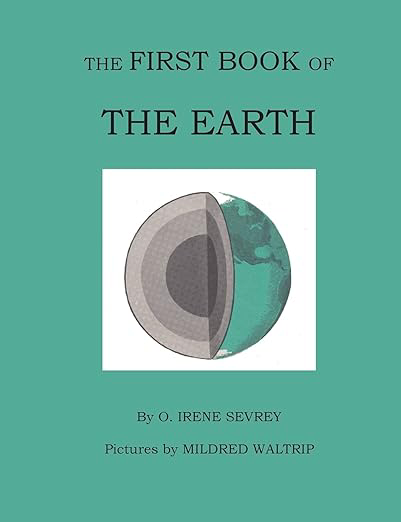
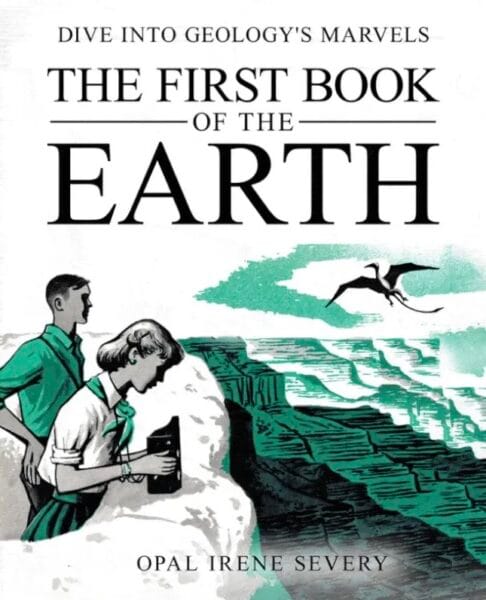
This study guide accompanies the living book The First Book of the Earth by O. Irene Sevrey (Living Book Press, 2025, ISBN: 9781761539534; Living Library Press, 2018, ISBN: 0692090711), which must be purchased separately.
- 70 pages
- Reading Level: 3-8 grade
- Prerequisites: none
- Reading assignment include page numbers for Living Book Press (LBP) and Living Library Press (LLP).
- Please note that the chapters containing a description of the formation of the earth are not assigned.
O. Irene Sevrey (1906-1994) grew up close to the shores of Lake Michigan. She was a veteran of World War 2 and later attended Western Michigan University. Opal Irene was an educator, an author, and an illustrator of children’s books. She liked to be informative in a clear way with her writing as well as her illustrations, some of which will be found under the name Irene Miner. She enjoyed painting, ceramics, photography, carpentry, and especially collecting stones and rocks. —Michele Jahncke (source)
Other Necessary Items to Complement This Course
- Review the Supply List for this course.
- A Nature Explorers Guide OR Handbook of Nature Study (LBP) by Anna Botsford Comstock
Schedule:
This study guide includes 33 morning lessons, three per week, each requiring approximately 20-30 minutes. Each week will include the following science lessons:
- Weekly Lesson 1: Nature Lore
- Weekly Lesson 2: Natural History Science Reading and sometimes an activity
- Weekly Lesson 3: Special Studies Reading or Natural History Activity
Other necessary science and nature study should be done during afternoons or evenings, and may include the following:
- Daily work outside exploring and investigating, making notes or drawings of their observations. Due to the subject matter of this study guide, some of this daily work will need to be done after sunset.
- Additional reading on this science topic and nature topics according to individual desire and interest.
I have been homeschooling my daughter for 5 years. Science has always been our struggle. I was introduce to the Charlotte Mason method last year and Sabbath Mood has been our lifesaver. The structure of each guide is easy to follow, rich in content and my daughter is finally getting along with science and learning. I love it!
—Deyka C
Sample Lessons:
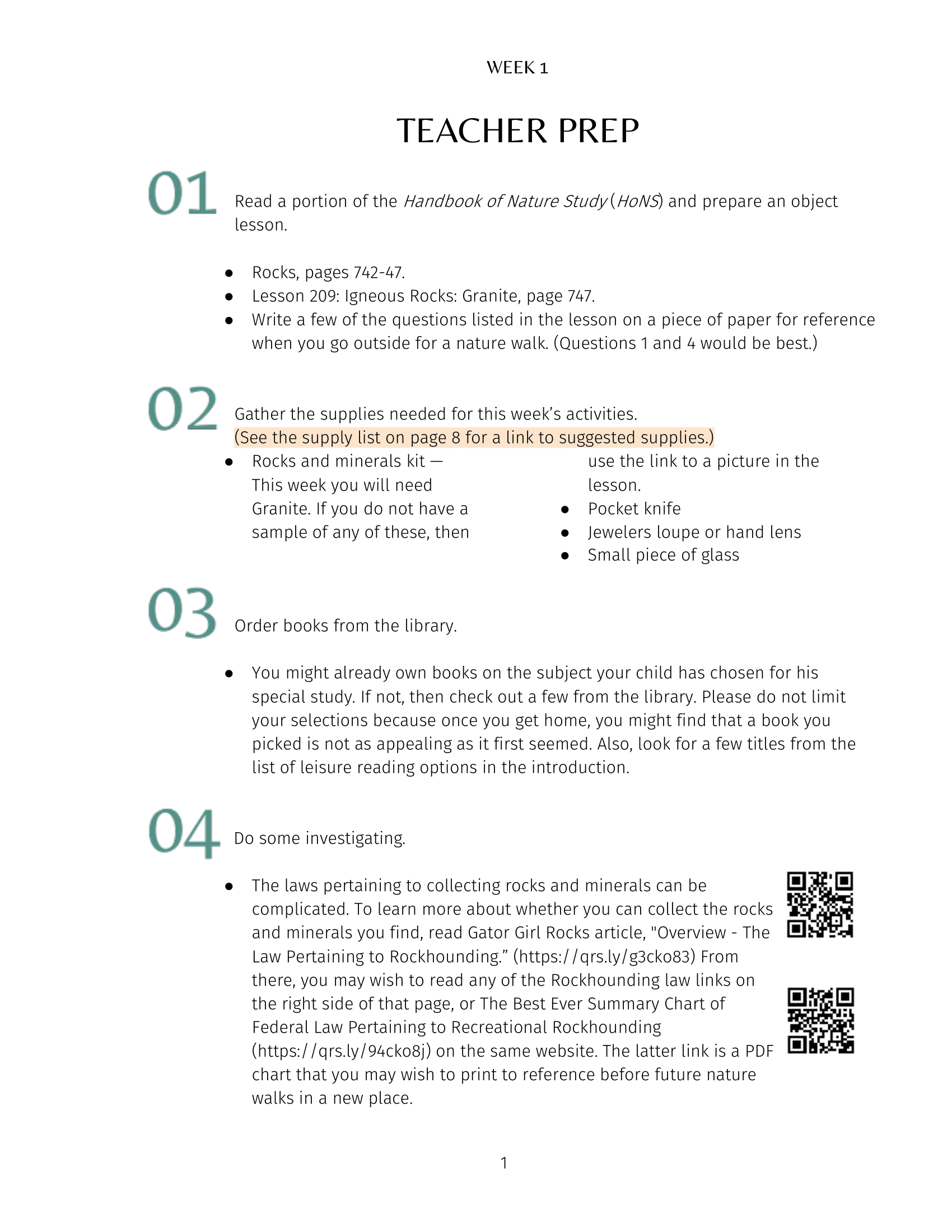
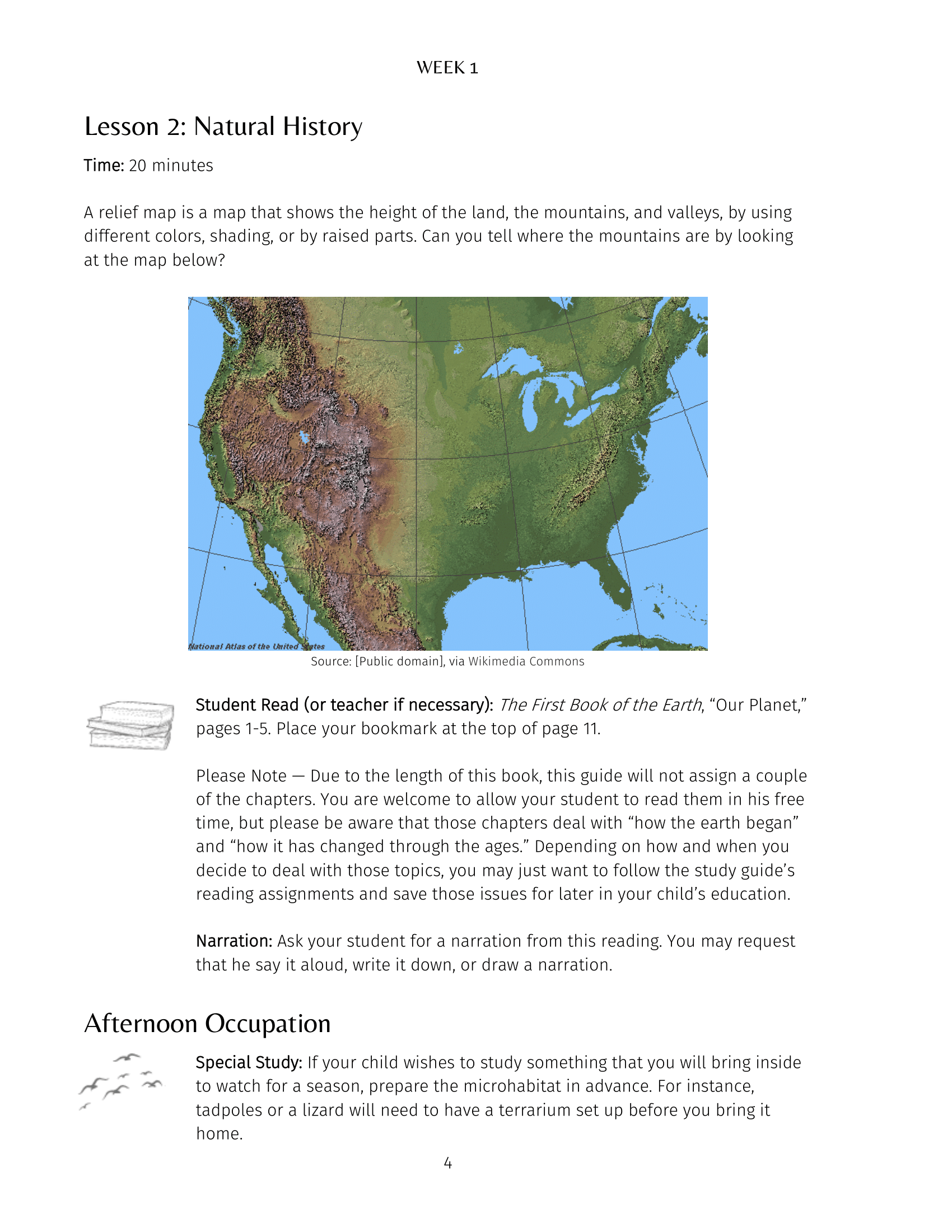
A digital version can be purchased below, but the paperback copies of this study guide must be purchased on Amazon.
Neither the study guide nor the accompanying spine text includes religious content. Therefore, a separate secular version is not available.
SMH offers discounted prices for Co-Op and Schools. If you are purchasing for Co-Ops, please refer to this page. For School License, please refer to this page.
SKU: -
Reviews
 Kids are enjoying the lessons!
We are very impressed with this study guide. I love the poems and the suggestions.
 A Favorite!
There are parts of the book that are hard to follow. I created a google doc with links to a few optional videos each week which was so helpful and added a lot of interest for my daughter. The experiments were fun too. We weren’t able to grow one of the blue crystals, I can’t recall the name. But we did grow the clear crystal and it was a highlight of the term. We have a trip to the Grand Canyon coming up which has added some excitement to this particular study.
 Introduction to Geology
This guide and the accompanying book offers a great introduction to Geology. Things were explained in a simple way that really helped bring understanding to the subject. One area that was difficult for us to complete was the object lessons. I feel like I would have had more success if they were scheduled directly into the lesson. For this reason we didn’t get to observe as many specimens as were listed in the guide.
You must log in to submit a review.