

In this Form 2 (grade 4-6) study guide, students will be introduced to simple and complex machines and how they are and have been, used in our world.
The study guide includes reading assignments from the spine text, narration prompts, and open discussion questions. Experiments related to the reading are also included. Optional supplemental activities, such as current events, videos, and article suggestions when there is time, are also included. Finally, you will find a link to an exam for each course in the introductory material.
- Pages: 64
- Prerequisites: none
Spine Text
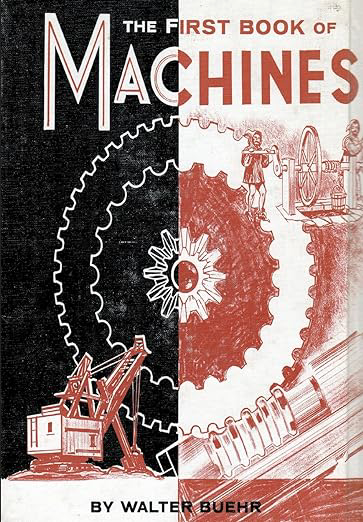

This study guide accompanies the living book The First Book of Machines by Walter Buehr ( Living Book Press, 2025, ISBN: 9781761534270; Living Library Press, 2017, ISBN: 0692973958), which must be purchased separately.
- 53 pages
- Reading Level: 4-6 grade
- Prerequisites: none
Walter Buehr (1897-1971) hailed from Chicago. He served in the US Army Engineers from 1917-1919 during World War 1. Army Engineers undertook diverse jobs: built docks, roads, bridges, and railroads essential to moving material and troops to the battlefront. Some operated enormous searchlights in anti-aircraft defense, others drew maps. First Sergeant Buehr received the Active Service Medal with three battle clasps for his service.
Returning from the Great War he attended the Detroit School of Design, the Philadelphia School of Industrial Art, and the Art Students League in New York. He then settled along the east coast with his family so he could always be close to a boat and the sea.
Mr. Buehr was a beloved author and illustrator known for the ability to “keep his discussion clear and his illustrations big”. —Michele Jahncke (source)
Other Necessary Items to Complement This Course
- Review the Supply List for this course.
- A Nature Explorers Guide OR Handbook of Nature Study (LBP) by Anna Botsford Comstock
Schedule:
This study guide includes 33 morning lessons, three per week, each requiring approximately 20-30 minutes. Each week will include the following science lessons:
- Weekly Lesson 1: Nature Lore
- Weekly Lesson 2: Natural History Science Reading and sometimes an activity
- Weekly Lesson 3: Special Studies Reading or Natural History Activity
Other necessary science and nature study should be done during afternoons or evenings, and may include the following:
- Daily work outside exploring and investigating, making notes or drawings of their observations. Due to the subject matter of this study guide, some of this daily work will need to be done after sunset.
- Additional reading on this science topic and nature topics according to individual desire and interest.
My 6th grade girl just brought me her exam to read because she was so proud of it. She and her sister studied machines this term. She told me, “Light bulbs are so interesting! And I really loved the videos, because they helped me see stuff– it’s visual.” This same child has exclaimed last year, on an experiment day, “This is so fun! I can’t wait for my sister to do this!” My heart is full. My students care. They are interested.
—Sara D.
Sample Lessons:
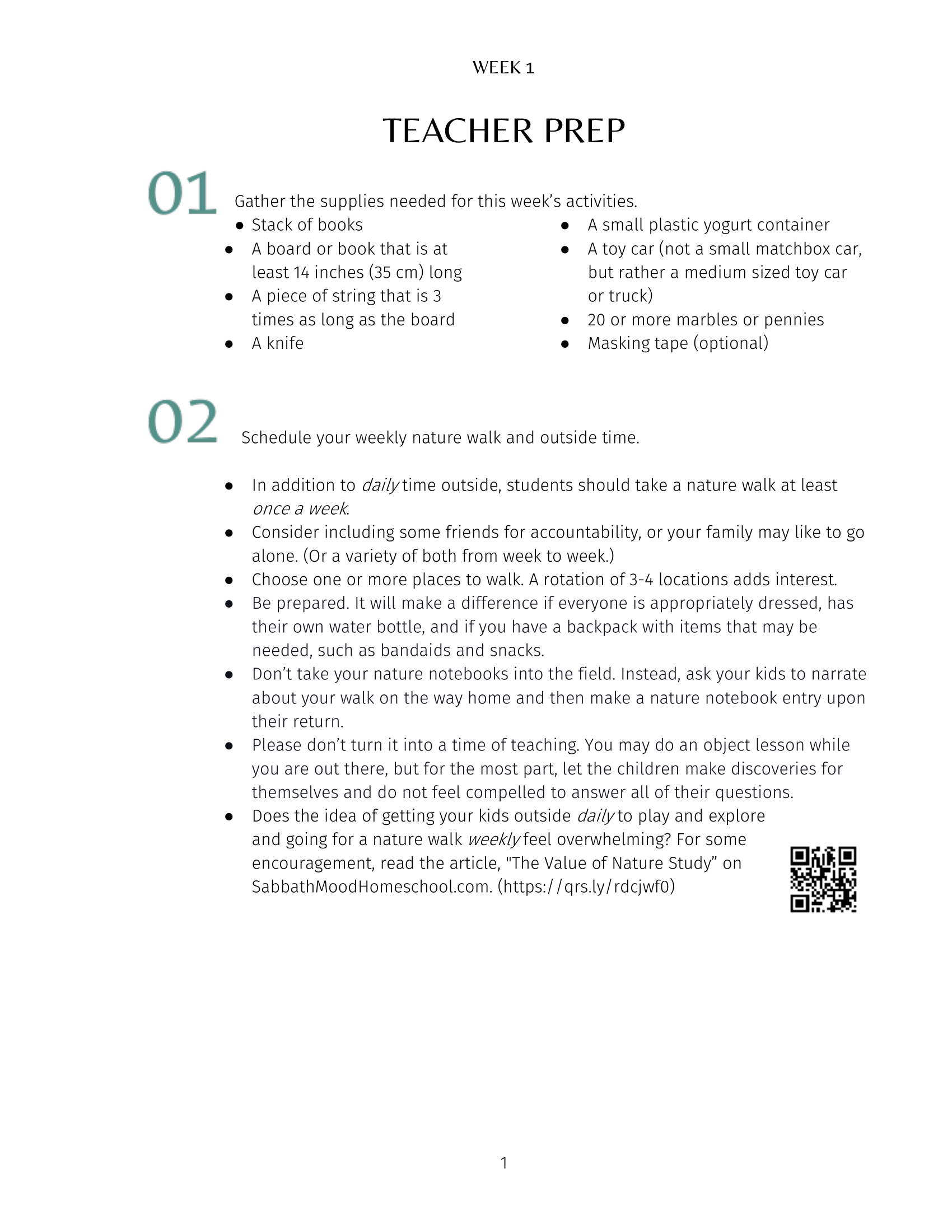
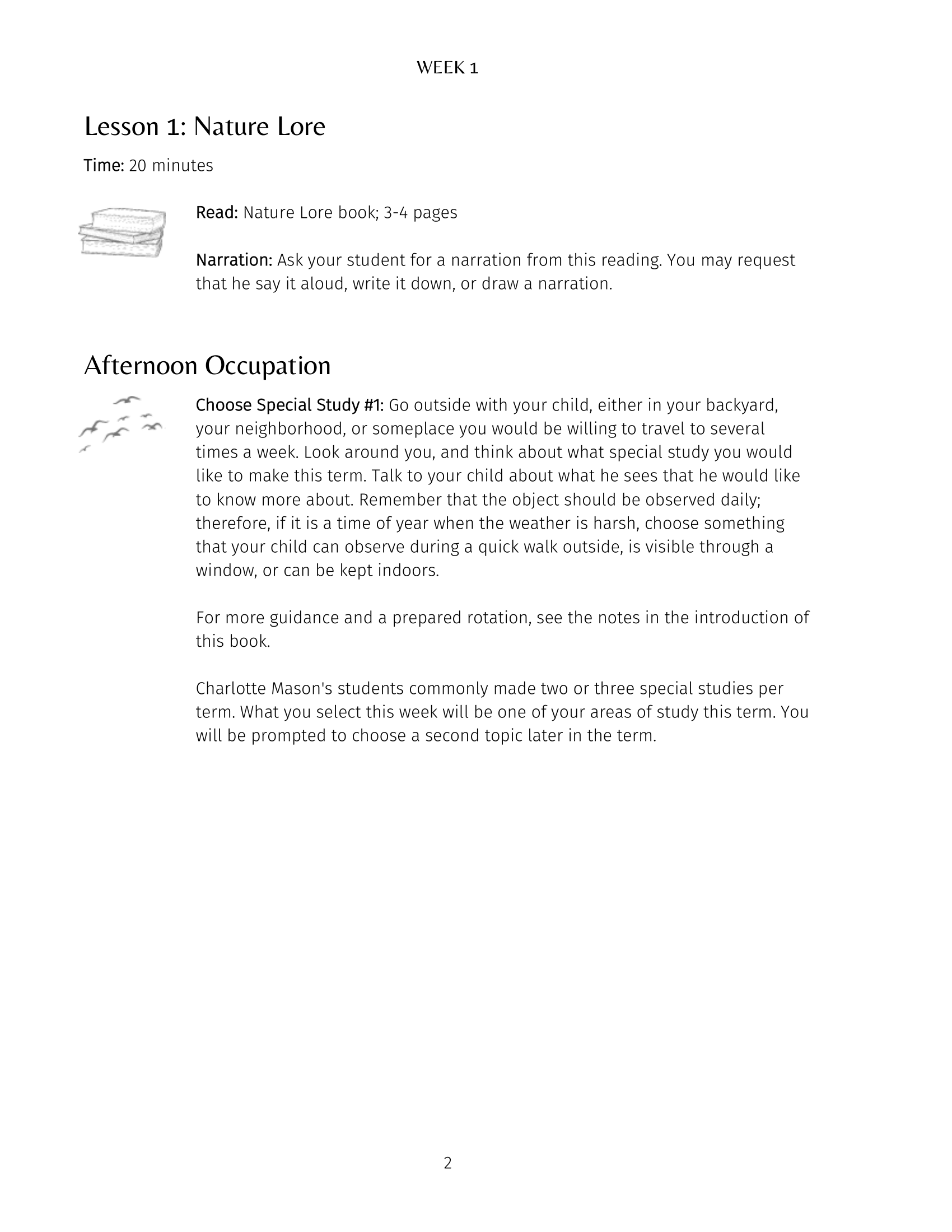
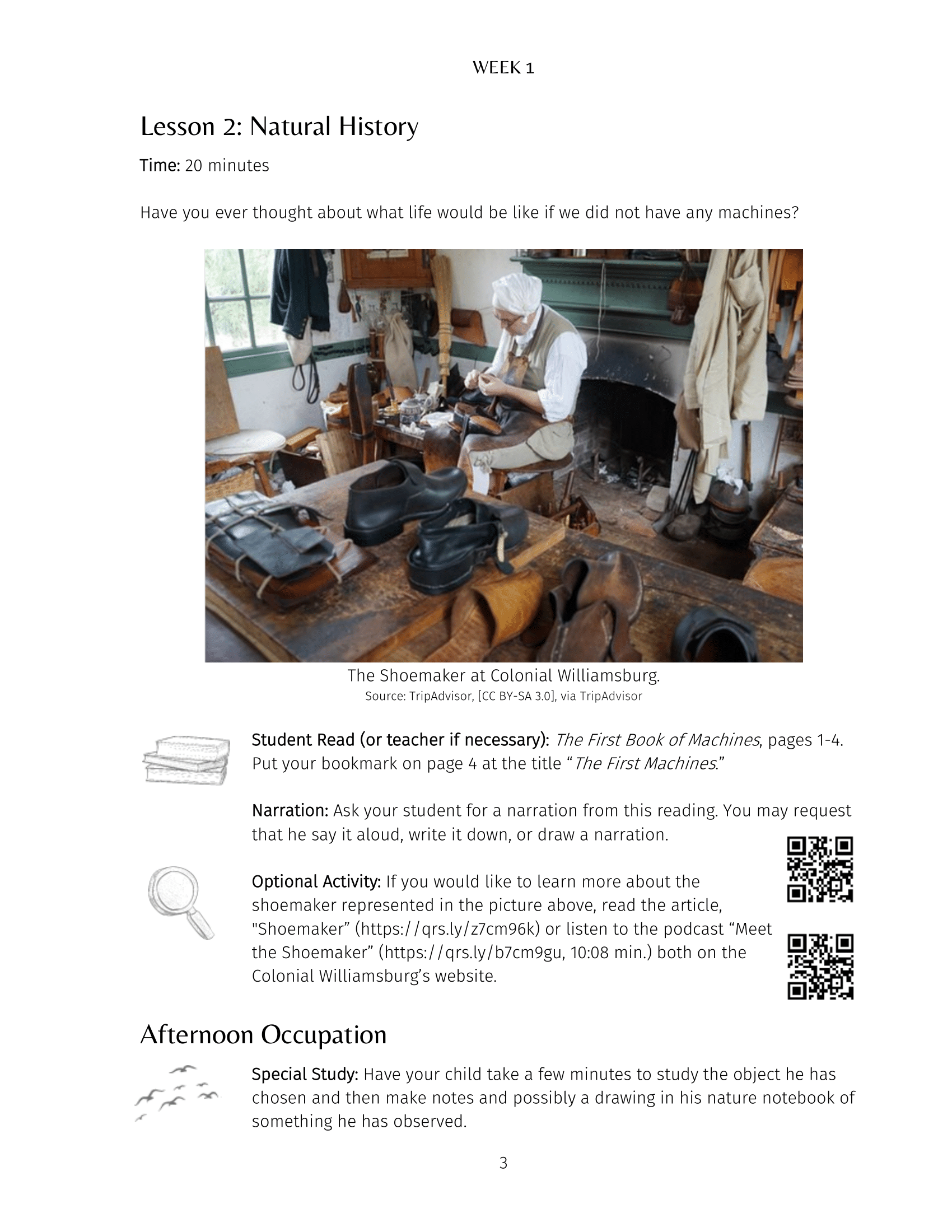
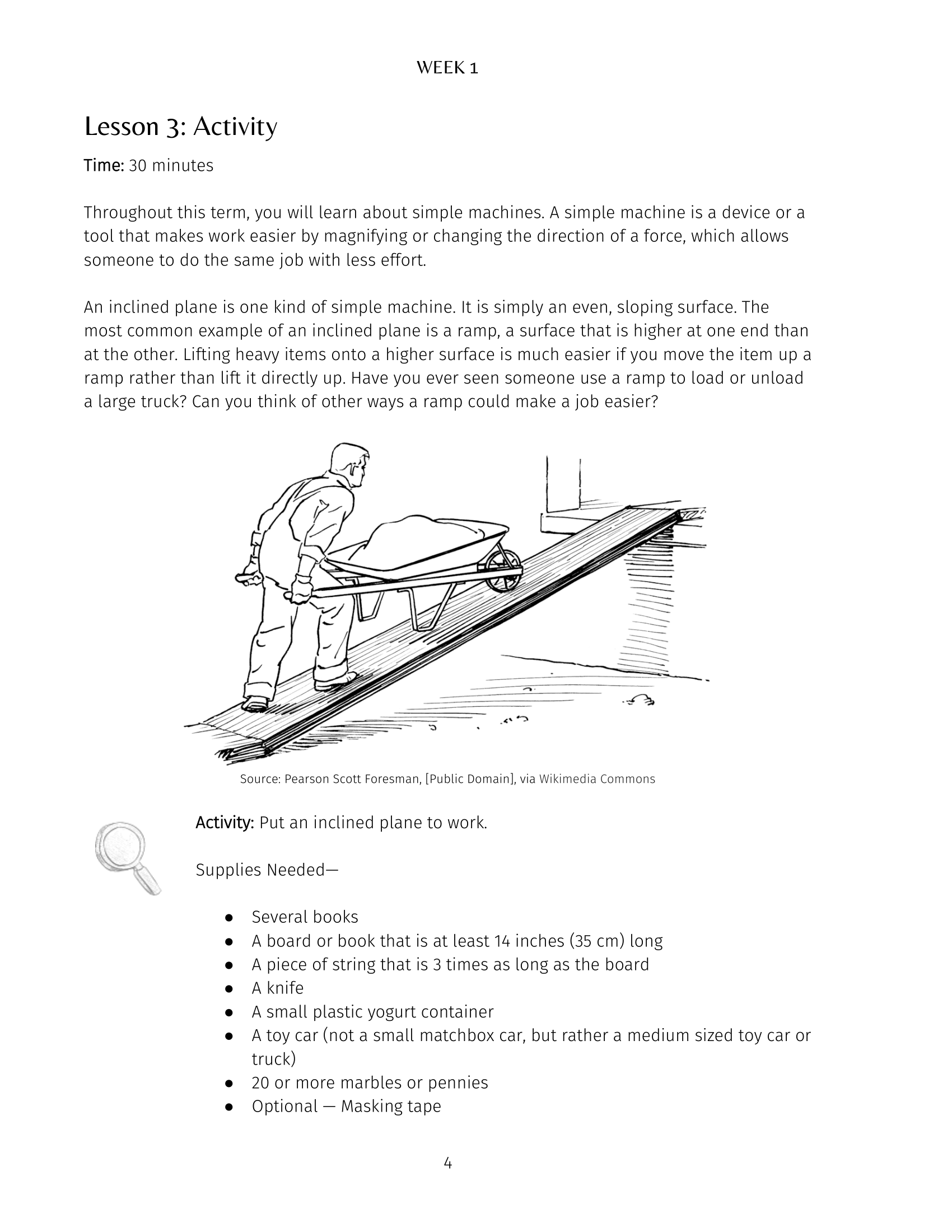
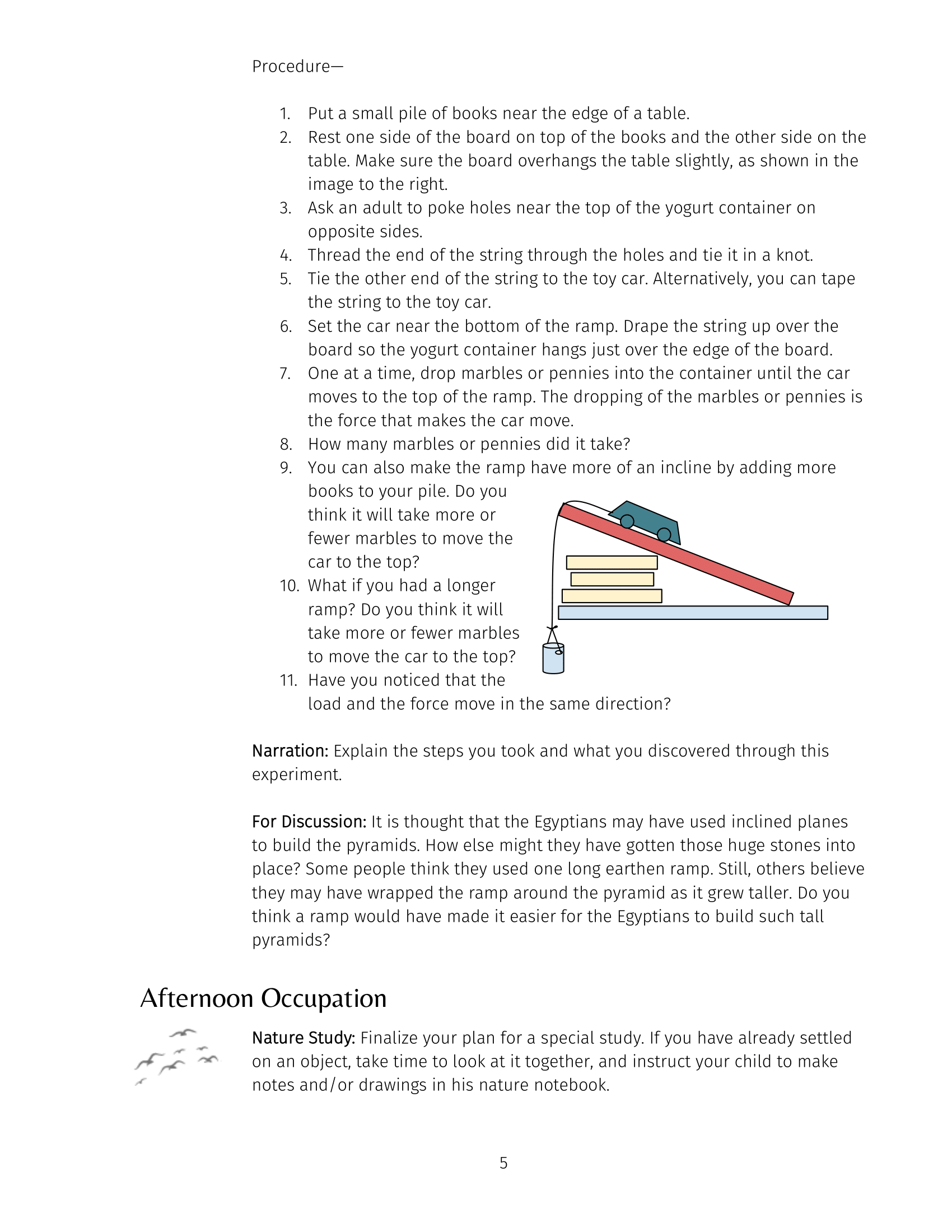
A digital version can be purchased below, but the paperback copies of this study guide must be purchased on Amazon.
Neither the study guide nor the accompanying spine text includes religious content. Therefore, a separate secular version is not available.
SMH offers discounted prices for Co-Op and Schools. If you are purchasing for Co-Ops, please refer to this page. For School License, please refer to this page.
SKU: -
Reviews
 Great guide to be accomplished independently
Last term my 4th and 6th grader completed the majority of these lessons without my help and they’ve thoroughly enjoyed the activities/experiments! The guide gives ample information on various simple machines and allows for some personalized learning choices with links to optional videos that go more in-depth on numerous topics.
 Needs An Update
I have used and loved a number of Sabbath Mood guides, but this one is the first we’ve had to abandon. The guide itself and the activities and links are great, but the spine text is not worth it. It’s wordy and confusing, without enough pictures/diagrams. The guide needs to be updated with a new spine text.
 Love it!
We have tried so many different science curricula over the years and nothing ever fit quite right. SMH Curriculum is everything I wanted in a science program. The textbooks have a rich, story driven narrative, there are hands on activities, and there is dedicated time for observing the world outside.
We have just started the Machines unit with my 5th grader and it has been a complete game changer. I finally feel like I have found the perfect science curriculum.
 Did not care for the book
I found the book for this study, The First Book of Machines, very difficult to follow and absorb, both for myself and my son. We loved a bunch of the activities, and watching videos about the kinds of machines, but really did not enjoy the book at all.
 My boys love the science lessons
This is one of my boys favorite lessons they look forward to! These lessons on machines have sparked interest in exploring other machines and how they work on their own. It’s been so much fun to study this course with them.
 Daughter's Favorite
We’ve worked through several of the Form 2 Science Guides and this has been my daughter’s favorite so far. The experiments in this one are easy to put together. As with all of the science guides, there is also prompting and instructions for nature walks/special study included. So important as this is a part of science that falls easily to the side. I’ve been very blessed by this curriculum, check through the suggested authors for special study books, we’ve found some new favorite authors. Great resource, especially as I was moving through science books on Ambleside Curriculum (which is wonderful), but was completely missing the experiment aspect and science notebook journaling. She has a much richer science experiment than big brother had. Only wish there were kits with materials!
 Tech & Engines
I used this guide with my son who loved the experiments. I’m so glad that each week has a dedicated experiment. Sabbath Mood’s Tech and Engines (Machines) guide is great for busy boys. We liked the spine and ended up keeping the book on our shelf.
 Mixed Feelings
I have some mixed feelings about this guide! We enjoyed the experiments but the book itself was just ok. I created a google doc with links for each week to short videos or photos that demonstrate the tools mentioned in the book which were essential for us to follow the text. I don’t think we would have enjoyed this book as much without that additional help.
 Enjoying this study, especially the activities
I am currently working through this study with my 11yo, but my 9yo and my 5yo twins love to participate in the activities. We particularly enjoyed testing making a lever and tracking how different weights and different lengths of the working arm affect what it can lift. Thank you for a great product.
You must log in to submit a review.