

One of the most common hesitations I hear about nature books is, “But the author lived somewhere else. Will this really apply to us?”
It’s a fair question. After all, we want our children to learn about the plants and animals they can actually see around them. When I lived in California, I loved using Kate Marianchild’s Secrets of the Oak Woodlands because every plant and animal included was something I could see when I stepped outside. Friends in the Southeast can enjoy Rob Simbeck’s Southern Wildlife Watcher. These books, written with love for a particular place, are treasures.
But such books are rare, and not even necessary. Because here is the truth: all nature is of a kind. When you read a well-written book by a naturalist—even one who lived in England more than a century ago—you are still learning things that apply to the plants and animals in your own backyard.
Science of Likeness
Charlotte Mason herself put it plainly:
“Now take up a natural object, it does not matter what, and you are studying one of a group, a member of a series; whatever knowledge you get about it is so much towards the science which includes all of its kind.” (1/70)
If you break open an elder twig, you’ll find a ring of wood around a center of pith—a mark of an entire division of plants. Pick up a smooth pebble, and you begin to understand how water and weather shape the very face of the earth.
Her point is simple: by studying one thing carefully, you gain knowledge about many things. “Small things may teach Great” (1/72).
Why Classification Matters
This is the gift of classification. Living things are grouped by their likeness—families, genera, species—so that when you learn something about one, you are learning about its kind.
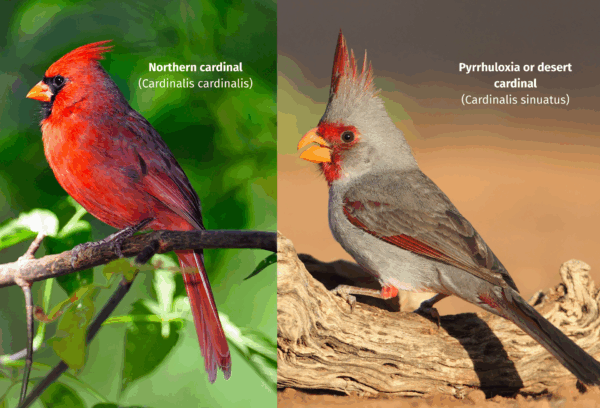
Take the cardinal. Many of us think immediately of the bright red Northern Cardinal, so common in the eastern United States. But travel west or south, and you’ll find other cardinals—Pyrrhuloxia in the deserts of Texas and Arizona, or the Vermilion Cardinal in South America. They are not identical, but their shared family traits are unmistakable: thick seed-cracking bills, vibrant coloring, and clear, whistling songs.
When we teach our children to see likeness and difference, they begin to understand the order of creation and the way science builds on observation.
Climate and the Shape of Nature
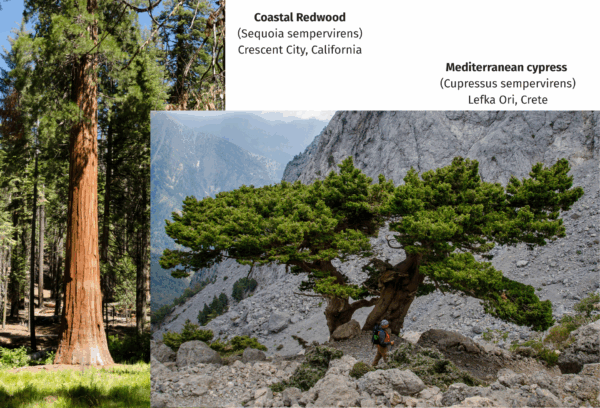
Of course, climate shapes what we can see in any given place. Cacti flourish in the American Southwest, while redwoods tower in the Pacific Northwest. And yet, even those redwoods belong to the cypress family—a family with members spread across nearly every continent, from desert edges to polar forests.
Seasons vary also. Some places experience dramatic shifts of snow and bloom, while others move to subtler rhythms of rainy and dry, or the ebb and flow of migrations. Every place has its pulse, its cycle, its way of marking time in the natural world. And every rhythm is worth noticing.
How to Use Nature Books Well
So do not reject a book simply because the author lived in another place. The point is not to memorize the particular plants or animals listed on its pages, but to see the kind—to notice likenesses, to trace patterns, to awaken wonder.
Let the book be a guide, and then step outside with your child. Compare what you’ve read with what you see. Notice the similarities, question the differences, and take joy in discovering both.
All Nature Is of a Kind
Charlotte Mason knew that by observing even the smallest thing, a child is already beginning the work of science. A twig, a pebble, a flower—all of these are doors into great truths.
The world over, nature is connected. Whether you are in California, the Carolinas, across the ocean in England, or in another hemisphere, your child’s careful attention to one plant or creature becomes knowledge that stretches far beyond its bounds.
And that is why we need not worry. Small things will always teach great.