

In this Form 3-4 (grade 7-9) study guide, students will learn about the field of botany. They will study the physiology of plants, including their structure, function, classification, and sensitivity.
This science study guide provides a comprehensive introduction to each lesson, along with reading assignments from the spine text, narration prompts, and open discussion questions. It also features experiments directly related to the reading, as well as optional supplemental activities such as current events, videos, and suggested articles for deeper exploration when time allows. Additionally, a link to an exam for each course is included in the introductory material.
The Form 3+ guides are written directly to the student, allowing them to work independently. Parents and teachers must provide the necessary materials (outlined in the supply list found in the introductory material) and review the student’s notebooks and oversee their progress to ensure the lessons are completed.
- Pages: 70
- Prerequisites: none
Spine Text
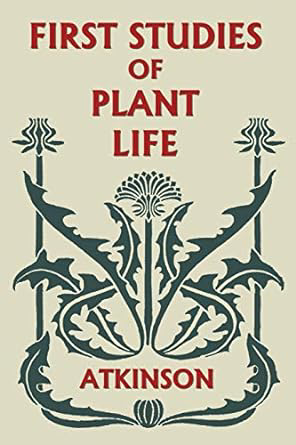
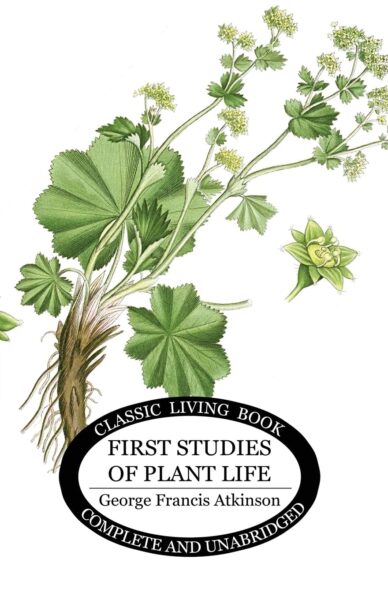
The study guide accompanies the living book First Studies of Plant Life by George Francis Atkinson. (Living Book Press, 2024, ISBN: 1761533789; Yesterday’s Classics, 2017, ISBN: 1633340902), which must be purchased separately.
- 280 pages, 33 chapters
- Reading Level: grade 7 and up
George F. Atkinson (1854-1918) left home at 13 to make his own way in reconstruction-era America. After “doing everything as boy and man that he could get to” he realized “if I were ever to be anything but a crude laborer, I must have education.” Back home he attended high school for the first time, a grown man amongst kids. He graduated from Cornell University then taught at several universities before being asked to return to Cornell as a professor of Biology.
Atkinson was a pioneer in the use of photography for documentation. He taught his students to do as he did, strictly and thoroughly identifying and cataloging specimens. Collections before this were often inadequate and incorrectly labeled. He loved to be in nature with his class or across the world collecting and studying fungi.
Professor Atkinson was remembered as “a leader who was always in his workroom, always accessible, who always cheerfully stopped his own work to help a younger man over a difficult place.” —Michele Jahncke (source)
Other Necessary Items to Complement This Course
- Review the Supply List for this guide.
- Seed packets may be hard to find in the fall and winter, so be prepared by purchasing your seeds early.
Schedule:
This study guide includes 33 lessons, each requiring approximately 30-40 minutes. It is scheduled once a week for an entire year, allowing time for exams at the end of each term and including other science subjects on the other days of the week. Please note that there will be times when an experiment will require the student to make observations outside of the once-a-week lesson time. This study guide just didn’t want to play by the rules!
We have been using SMH guides for science for middle school and high school. My kids LOVE the material. I love that they are learning science through living books. The notebooks they create are incredible. I only wish I had learned science this way.
—Erin, Wisconsin
Sample Lessons
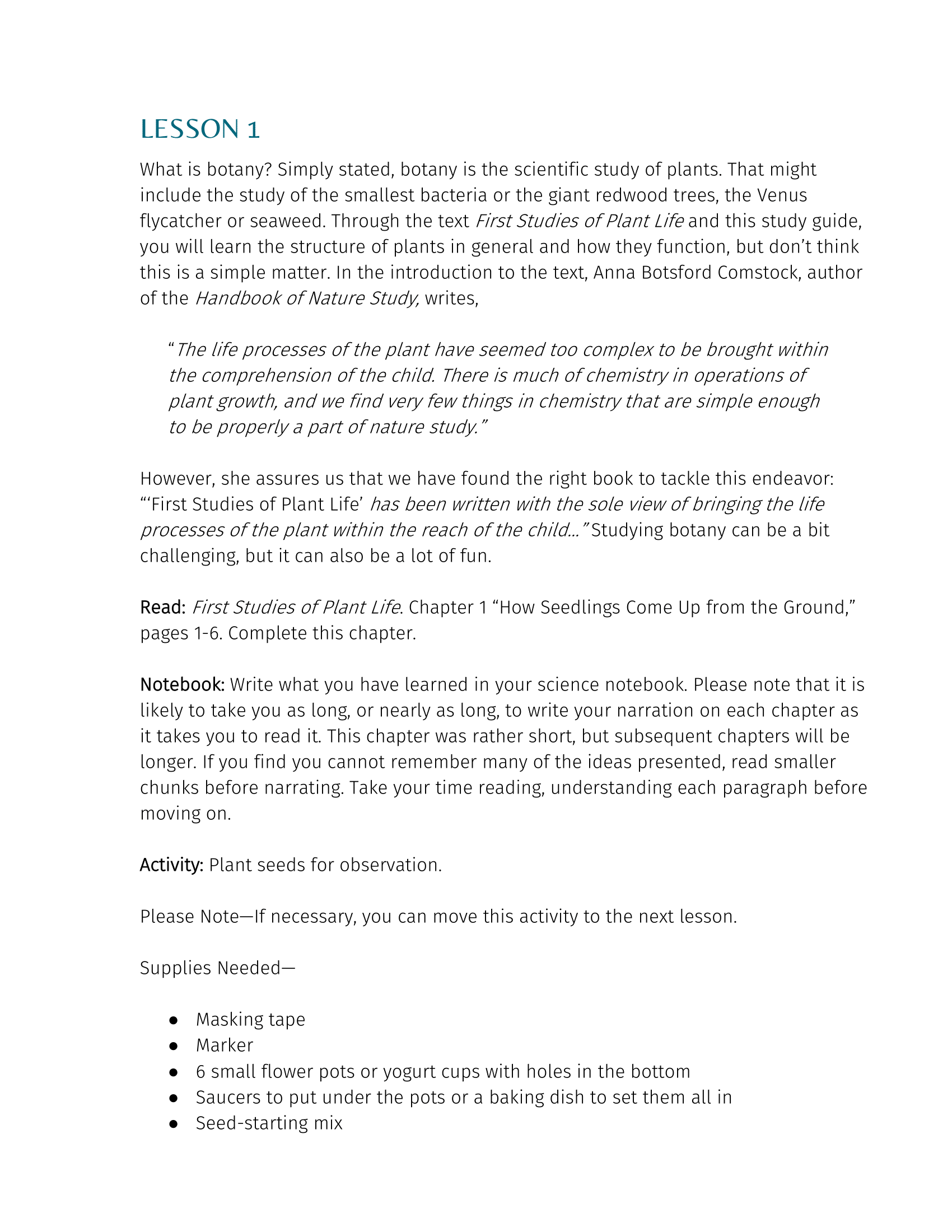
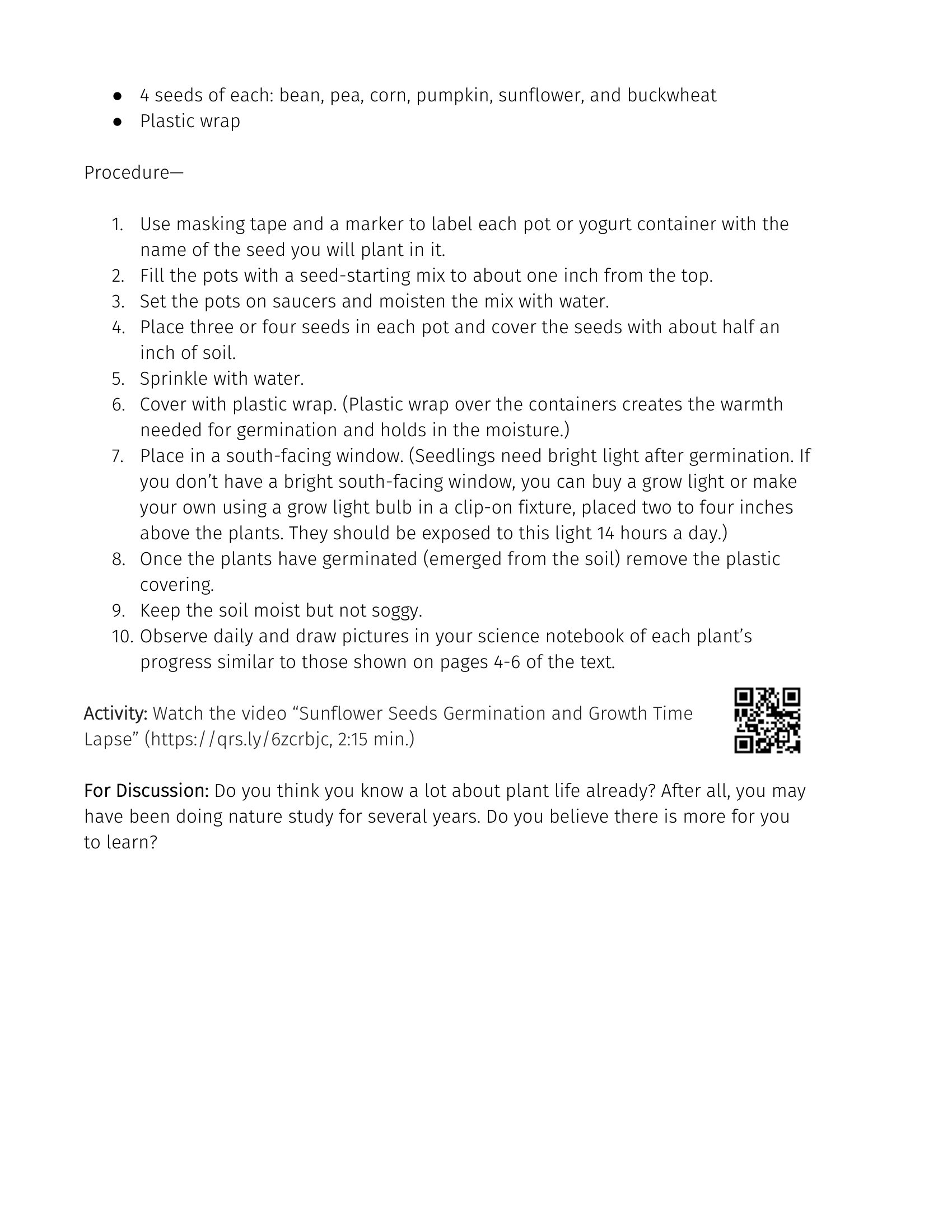
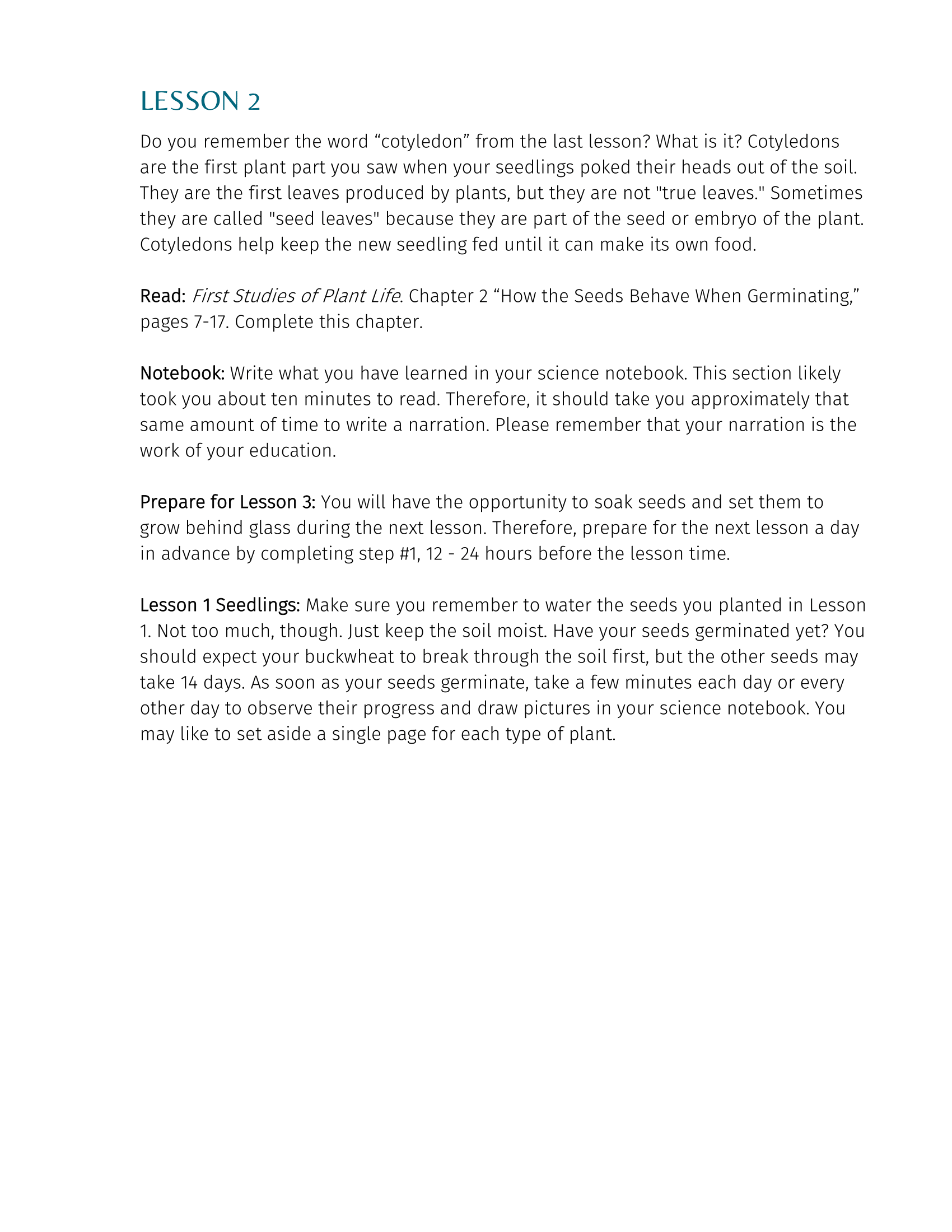
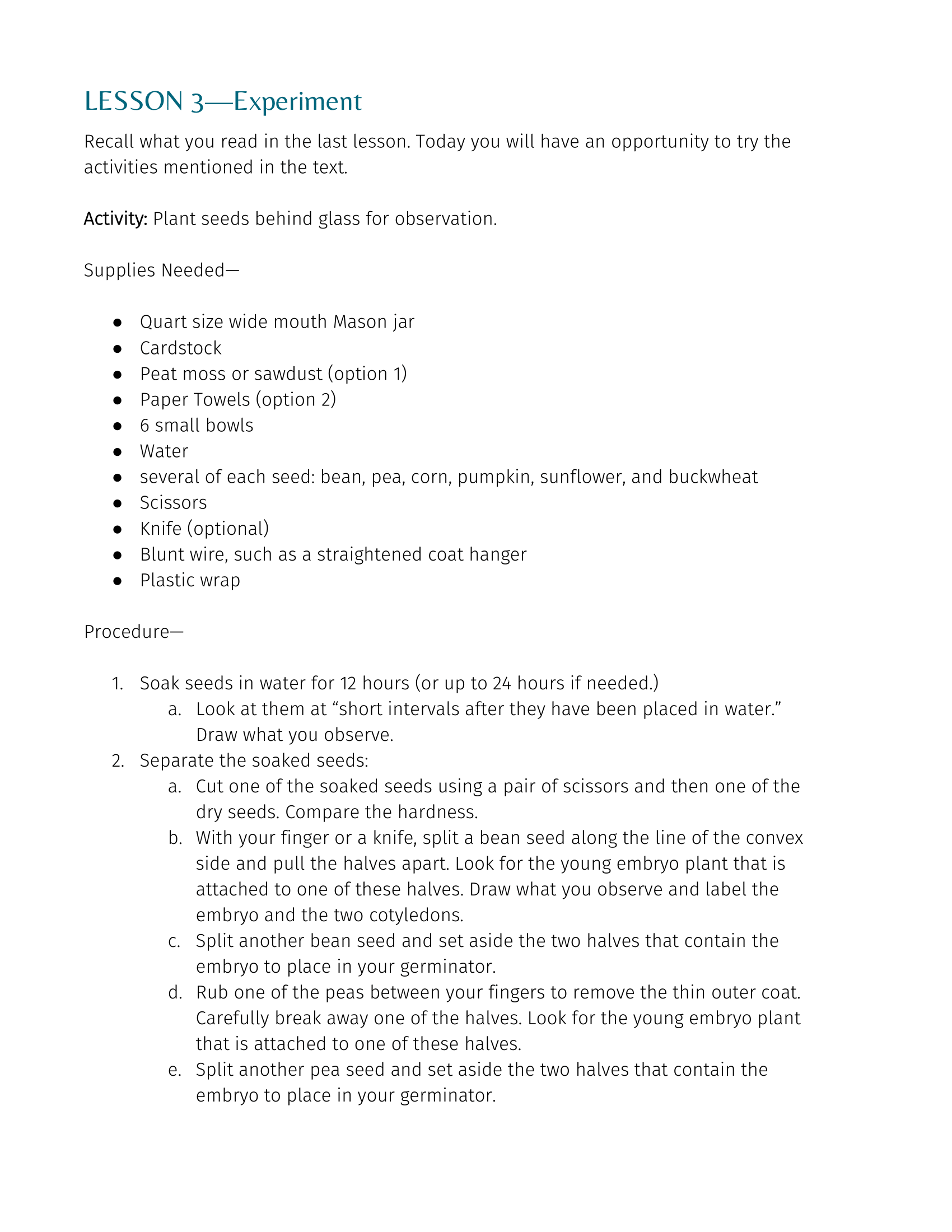
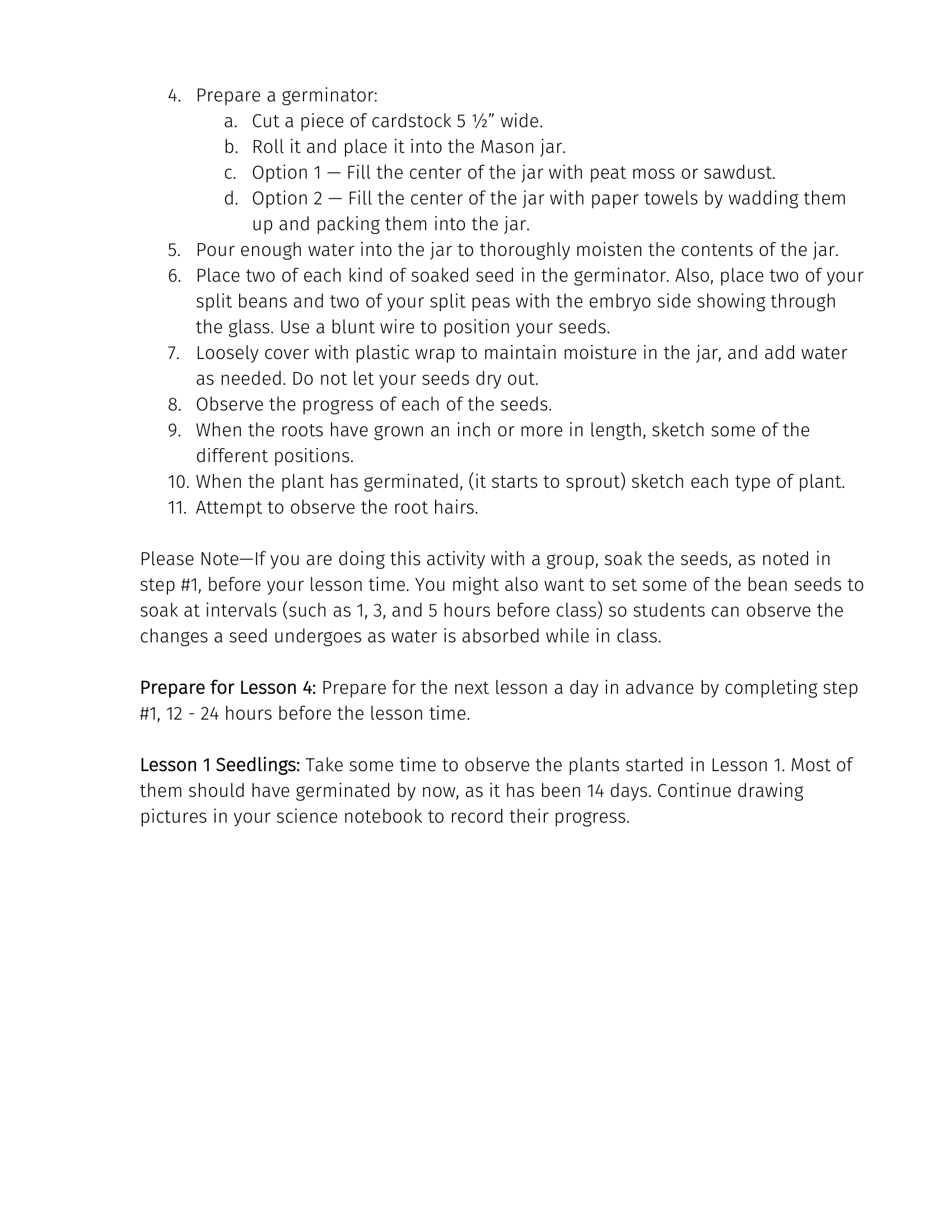
A digital version can be purchased below, but the paperback copies of this study guide must be purchased on Amazon.
Neither the study guide nor the accompanying spine text includes religious content. Therefore, a separate secular version is not available.
SMH offers discounted prices for Co-Op and Schools. If you are purchasing for Co-Ops, please refer to this page. For School License, please refer to this page.
Reviews
 Not Recommended for Weekly
I am using this guide weekly with a group of 20 students.
Compared to some Sabbath Mood texts, the First Studies of Plant Life is not my favorite. Many students would not find the material accessible independently. Often, the plants referenced in the book as ones the author clearly thinks should be commonly known are plants that I’ve never heard of (nor has my co-teacher who runs a flower farm!) Additionally, the experiments/activities require a comparatively large number of materials, some of which are difficult to find.
This guide is difficult to use weekly because a number of the experiments require observation 24 hours later, and daily plant care.
My students have loved observing the changes in the plants week to week and especially enjoyed the experiments with beets.
Overall, the guide is valuable, but it has taken a significant amount teacher prep and adjustment to make it work on a weekly basis (particularly because we have to carry materials – and plants! – back and forth to the weekly location).
You must log in to submit a review.